Topic 4: RUPEE: HOLDING ON
The Indian rupee had a choppy but largely range-bound
trading pattern in August 2026, remaining under pressure
for most of the month but ending only marginally weaker
against the US dollar. USD/INR opened the month at
around ₹95.40 and traded within a relatively narrow but
volatile range. The rupee strengthened to approximately
₹94.84 on August 5, supported by a temporary decline in
crude-oil prices following the Reserve Bank of India's
policy decision, but subsequently weakened as oil prices
and global risk concerns resurfaced. The currency
touched around ₹96.00 on August 24 before recovering
towards the end of the month. Overall, USD/INR closed
August near ₹95.17–₹95.60, depending on the market
reference used, implying only a marginal monthly
depreciation of roughly 0.1–0.5%. Despite this limited
monthly movement, the rupee remained close to
historically weak levels and had depreciated significantly
over the preceding year.
The principal pressure on the rupee came from
fluctuations in crude-oil prices amid continuing
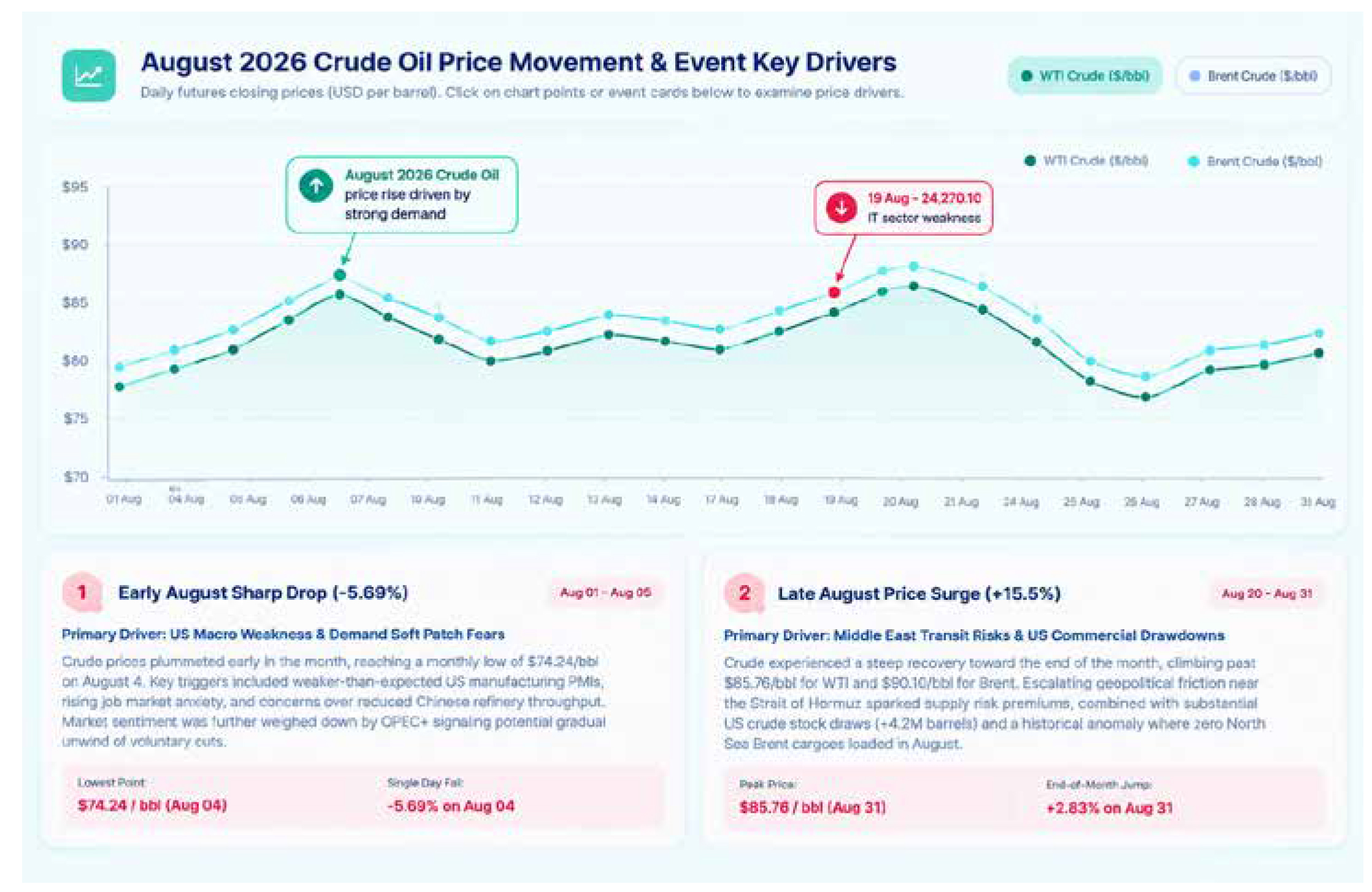
geopolitical tensions in the Middle East. Brent crude
remained elevated for much of August as concerns over
the Strait of Hormuz and uncertainty surrounding the
US-Iran situation periodically intensified. Oil prices
moved towards the high-$80s and, at times, closer to $90
per barrel before easing as geopolitical concerns
moderated. Given India's dependence on imported crude,
higher oil prices directly increase the country's import bill
and demand for US dollars, placing downward pressure
on the rupee. Conversely, temporary declines in crude
prices provided short-lived relief to the currency.
Sustained dollar demand from importers also weighed
on the rupee, as Indian companies needed foreign
currency to settle import bills and meet their external
obligations. Maturing positions in the offshore
non-deliverable forward (NDF) market further
contributed to intermittent dollar demand.
Global monetary and financial-market conditions added
to the pressure. The US dollar remained relatively firm
during parts of August as elevated US Treasury yields
and uncertainty surrounding the Federal Reserve's future
policy direction encouraged demand for the dollar. Higher
US yields reduce the relative attractiveness of
emerging-market assets and can trigger capital outflows,
thereby weighing on currencies such as the rupee. Periodic
risk-off sentiment in global markets, coupled with selling by
foreign portfolio investors in Indian equities, also generated
additional demand for dollars.
A key factor preventing a sharper depreciation was active
intervention by the Reserve Bank of India. The RBI reportedly
continued to manage currency volatility through spot and
forward-market operations, selling dollars when pressure on
the rupee intensified. This intervention helped contain
moves beyond the ₹95.5–₹96 levels and reinforced the
perception that the central bank was willing to prevent
excessive volatility rather than target a specific
exchange-rate level. Strong foreign-exchange reserves
provided the RBI with sufficient capacity to smooth the
market and absorb temporary demand for dollars.
Foreign-currency inflows through the RBI's special FCNR(B)
deposit-related measures also provided support during the
month. These inflows strengthened the country's external
liquidity position and increased the RBI's ability to intervene
in the foreign-exchange market. However, support from
these flows began to diminish towards month-end as the
special FCNR(B) window was closed earlier than originally
scheduled. This reduced one of the temporary cushions
supporting the rupee.
Overall, August 2026 was characterised more by managed
stability than a clear directional move. Elevated crude prices,
geopolitical uncertainty, firm US yields and sustained dollar
demand created persistent depreciation pressure, while RBI
intervention, strong foreign-exchange reserves and
foreign-currency inflows helped absorb much of the
pressure. As a result, the rupee remained broadly
range-bound and ended the month only marginally weaker,
despite trading close to its historical lows. The August
experience highlighted the RBI's continued role in smoothing
currency volatility and demonstrated how policy intervention
and external liquidity buffers can temporarily offset
challenging global and domestic fundamentals.