
Topic 4: RUPEE: ASSAULTED
In April 2026, the Indian rupee (INR) experienced an
exceptionally volatile and weakening trend against the
US dollar (USD), driven primarily by external shocks
rather than domestic economic weakness. The currency
came under sustained pressure throughout the month,
reflecting a combination of surging crude oil prices,
geopolitical tensions in West Asia, global monetary
tightening, and significant capital outflows. While some
data points suggest extreme depreciation toward the
₹95 mark, the broader and more consistent market
narrative indicates that the rupee moved within a sharply
volatile but controlled depreciating range, weakening
from around ₹82.8–83.2 per USD in late March to
approximately ₹83.8–84.5 by the end of April. This made
April one of the most turbulent months for the rupee in
recent times, marked by sharp swings rather than a
one-directional collapse.
The rupee’s movement over the month reflected shifting
global sentiment. Early in April, the currency came under
pressure as crude oil prices surged and risk aversion
increased, pushing it past the ₹83 mark. Around
mid-April, there were brief phases of stabilization and
even mild recovery, supported by temporary easing in
geopolitical tensions and intervention by the Reserve
Bank of India. However, these gains proved short-lived,
and by the latter part of the month, the rupee weakened
again toward the ₹84+ zone as external pressures
persisted and demand for dollars remained strong.
Overall, the rupee displayed a pattern of high volatility
with a clear depreciation bias.
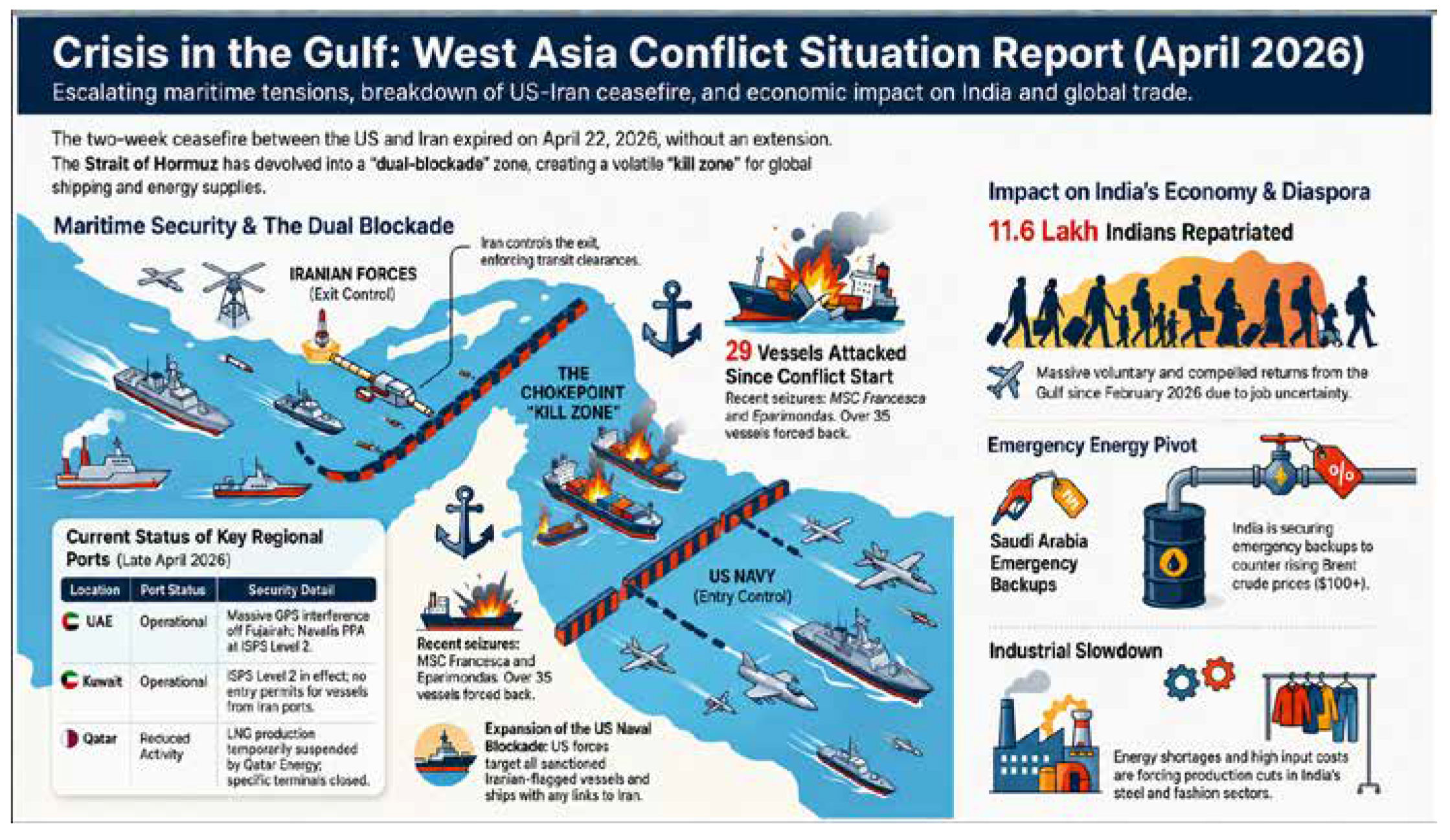
The primary driver of this weakness was the sharp rise in
crude oil prices due to escalating conflict in West Asia.
Brent crude surged toward $100–110 per barrel,
significantly increasing India’s import bill. As India
imports over 80–90% of its crude requirements, higher
oil prices led to a surge in demand for US dollars by oil
marketing companies to finance imports. This placed
direct downward pressure on the rupee and worsened
the current account deficit outlook, further weakening
currency sentiment.
Geopolitical tensions also triggered a global “risk-off”
environment. Investors shifted capital toward safe-haven
assets such as the US dollar and gold, leading to
outflows from emerging markets like India. Foreign
institutional investors (FIIs) pulled out substantial funds
from Indian equities and debt markets, intensifying dollar
demand and adding to rupee depreciation. This flight to
safety was reinforced by uncertainty surrounding global
trade routes and energy supply disruptions.
Another key factor was the strength of the US dollar,
supported by the US Federal Reserve’s “higher for
longer” interest rate stance. Elevated US yields attracted
global capital into US assets, reducing the relative
attractiveness of emerging market investments. This
narrowing of interest rate differentials exerted additional
pressure on the rupee, as capital moved away from India
toward safer, higher-yielding US instruments.
Inflation dynamics further compounded the situation.
Rising crude prices and a weakening rupee created a
feedback loop—higher oil costs increased imported
inflation, while a weaker currency made imports even
more expensive. This heightened concerns about
inflation in India and reduced expectations of monetary
easing, reinforcing the negative sentiment around the
rupee.
Despite these pressures, the RBI played a crucial
stabilizing role. It intervened actively in the foreign
exchange market by selling dollars from its reserves and
using liquidity tools to prevent excessive volatility. While
the central bank did not attempt to defend a specific
exchange rate level, its actions helped contain the
rupee’s depreciation within a manageable range and
avoided a disorderly. Some domestic factors also
provided limited support. Continued inflows from
domestic institutional investors, relatively stable
macroeconomic fundamentals, and steady foreign
direct investment and services exports helped cushion
the impact of external shocks. In summary, April 2026 was a pressure-heavy month for the rupee, shaped by a “perfect storm” of high oil prices, geopolitical uncertainty, global risk aversion, and strong US dollar dynamics. The rupee weakened under these external stresses but remained relatively stable compared to more severe scenarios, thanks to timely RBI intervention and underlying economic resilience.