
Topic 2: DEBT: YIELD PRESSURES
Indian debt markets delivered a weaker performance in
January 2026, contrasting sharply with the simultaneous
correction in equity markets. Bond yields hardened
across the curve as concerns over elevated government
borrowing, tightening system liquidity, and shifting global
capital flows outweighed the Reserve Bank of India’s
liquidity support measures. Despite debt’s traditional
safe-haven appeal, supply-side pressures capped price
gains and pushed yields to multi-month highs.
The most notable development during the month was the
sharp upward movement in sovereign bond yields. The
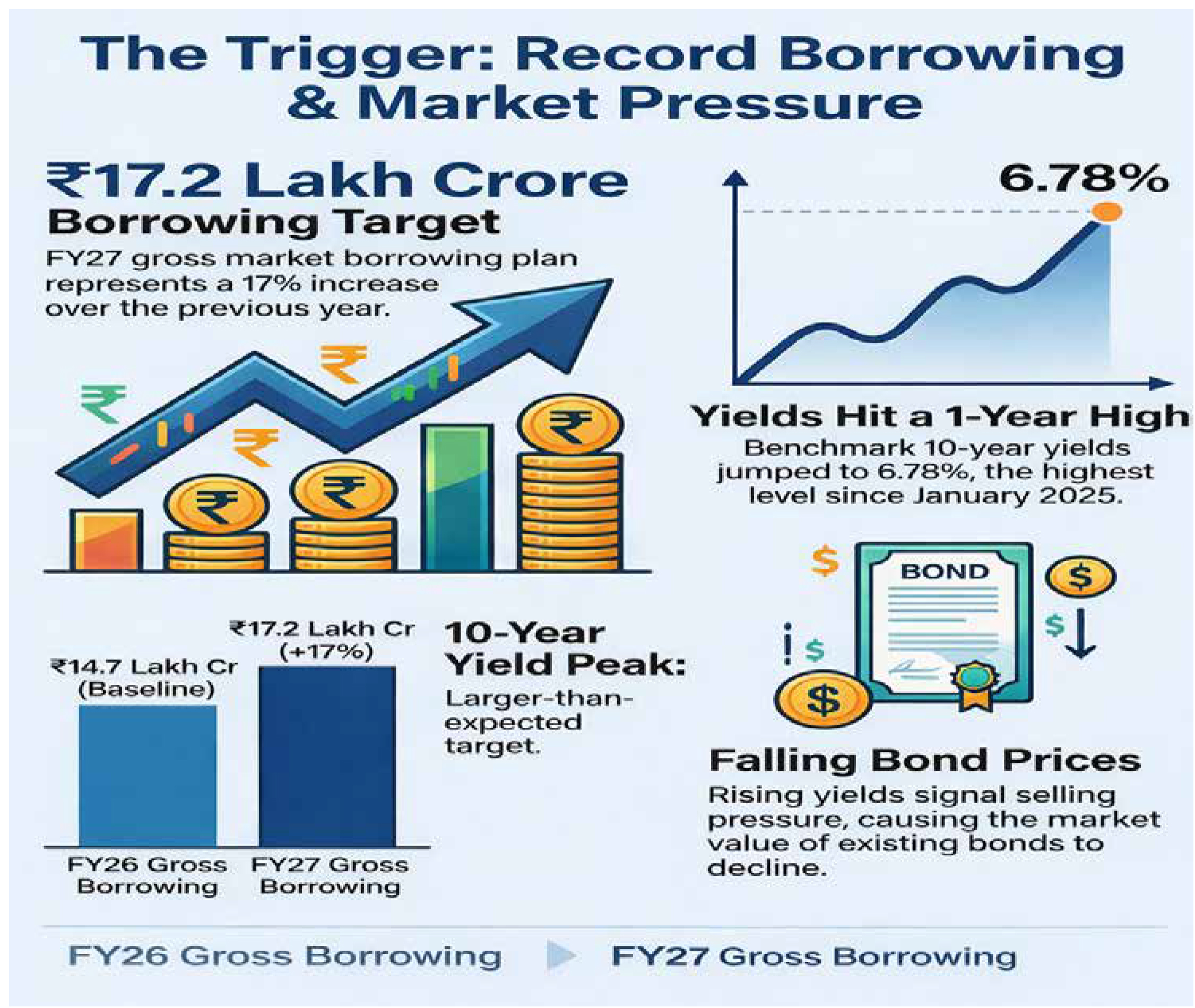
benchmark 10-year government security yield rose by
approximately 25–40 basis points from early January
lows of around 6.5%, touching an 11-month high of 6.72%
by the end of the month. The move was driven largely by
expectations of significantly higher borrowing by both
the central and state governments in the upcoming fiscal
years.
Corporate bond yields also edged higher, rising between
3 and 28 basis points across tenors as spreads widened
modestly amid cautious demand. In contrast, very
short-term rates showed mixed trends. Overnight
interbank call money rates eased briefly to around 5.30%
due to RBI liquidity injections, though volatility persisted
at the short end of the curve. A key factor weighing on
bond markets was the anticipated surge in government
borrowing. Pre-Budget signals and market estimates
suggested gross market borrowing of approximately
₹15.6 lakh crore for the central government in FY26-27,
with additional borrowing by states pushing total supply
pressure close to ₹30 trillion. This scale of issuance
raised concerns about the market’s ability to absorb
supply without higher yield premiums. Auction dynamics
reflected this stress. While Treasury bills continued to
see healthy demand, longer-tenor government securities
witnessed tepid bidding, forcing yields higher. Historical
trends suggest that large state borrowing
calendars—estimated at nearly ₹10.2 trillion—often
correlate with 20–50 basis point increases in benchmark
yields, a pattern that began to play out during the month.
Liquidity conditions further compounded pressure on
debt markets. Banking system liquidity remained in
deficit, driven by sluggish deposit growth of 10.7%
year-on-year compared with credit growth of 11.5%.
Additionally, RBI’s foreign exchange
interventions—estimated at nearly $30 billion—to
stabilize the rupee drained systemic liquidity and
reduced surplus reserves. Regulatory and accounting
changes prompted banks to conserve cash, pushing
one-year certificate of deposit (CD) yields up to 7.20%,
notably above the policy repo rate of 6.25%. Call money
rates intermittently spiked to 6.45%. The RBI responded
with variable rate reverse repo (VRRR) auctions totalling
nearly ₹1 trillion and conducted open market operations
(OMOs) worth about ₹2.6 trillion. While these measures
provided temporary relief at the short end, they were
insufficient to offset medium- and long-term supply
concerns.
Foreign portfolio investors (FPIs) shifted stance during
January, becoming net sellers of Indian debt to the tune
of approximately $1.5 billion—the first monthly outflow
since June 2025. Rising global bond yields, particularly US
10-year Treasuries offering yields near 4.8%, improved the
relative attractiveness of developed market debt.
Meanwhile, India’s real yields compressed to around 1.8%,
reducing carry appeal at the margin.
Despite January’s outflows, year-to-date debt inflows
remained positive at $6.16 billion, supported by longer-term
confidence in India’s macro stability. Within the domestic
market, FPIs showed a preference for high-quality AAA
corporate bonds. Nonetheless, spreads widened by 5–10
basis points for AA and AAA issuers, and the BSE debt index
declined around 0.8% during the month. Additional
disappointment came from the absence of India’s
government bonds in the Bloomberg Emerging Market bond
index, with inclusion deferred to March. This delayed
potential inflows of nearly $3 billion. Globally, geopolitical
tensions, trade rhetoric from the US, and a weaker rupee
hovering near 86.2 per dollar increased hedging costs and added to investor caution. Although the RBI maintained a steady policy stance amid inflation near 5.5%, external pressures—including oil prices around $75 per barrel—indirectly tightened financial conditions. While debt markets offered relative safety compared to equities, which fell nearly 3% during the month, heavy supply limited the upside. Gilt funds managed modest gains of 0.2–0.5% as investors selectively played duration. Overall, January 2026 highlighted the vulnerability of Indian debt markets to supply shocks and global shifts in risk appetite. Despite proactive RBI support, elevated borrowing and liquidity constraints pushed yields higher. Until borrowing clarity improves and global volatility eases, bond markets are likely to remain range-bound with an upward bias in yields, favouring cautious duration strategies and high-quality credit exposure.